
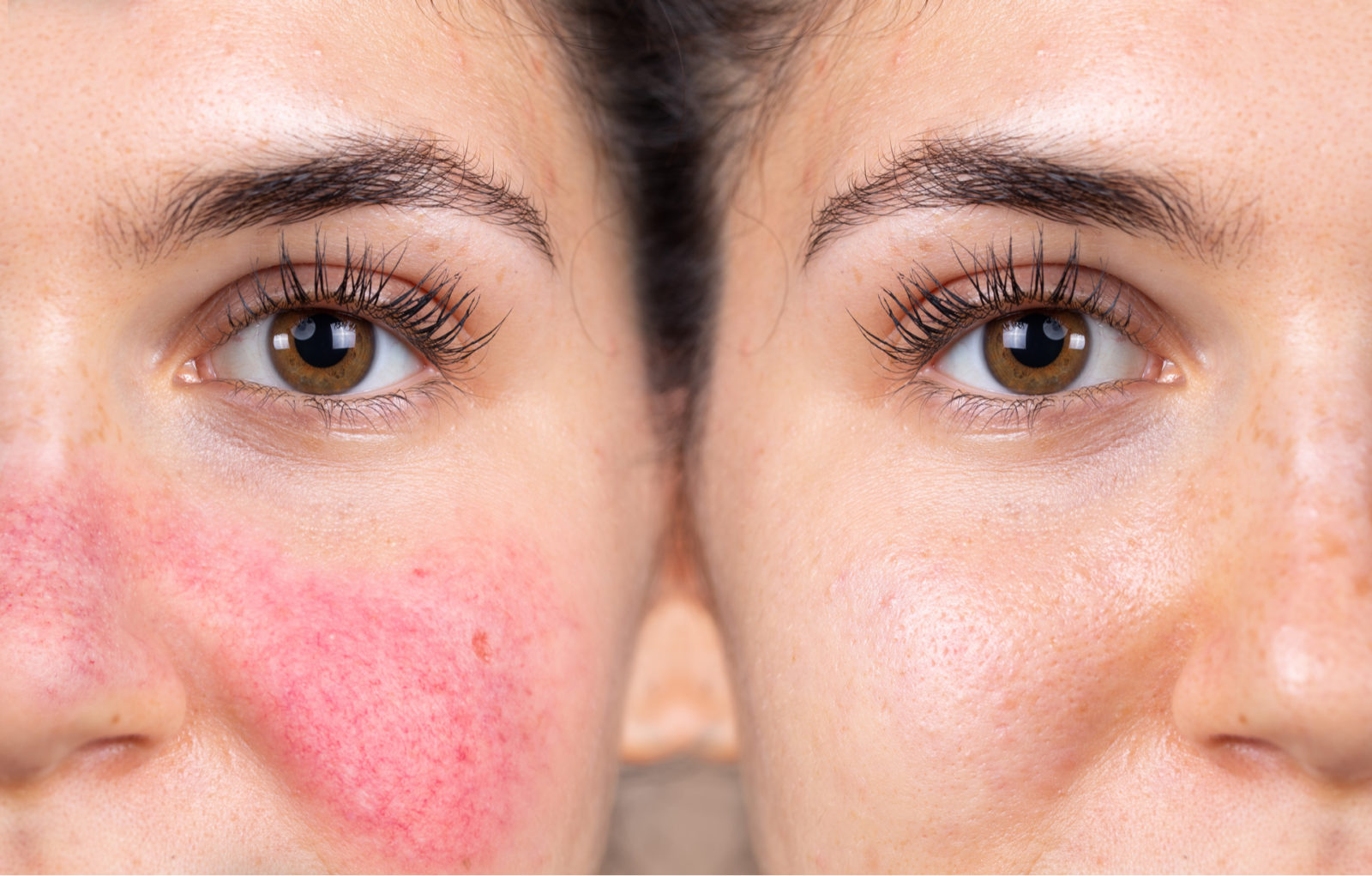

Rosacea can cause persistent facial redness, visible blood vessels, irritation, and increased skin sensitivity. Professional dermatology care can help identify triggers and provide treatments suited to the condition’s severity. Here are several approaches to rosacea management and sensitive skin care:
Identify Rosacea Triggers
Triggers are factors that spark or worsen rosacea symptoms, and they vary from person to person. A dermatology provider may ask you to track daily habits, and this record helps reveal patterns. Once you know your triggers, you can adjust your routine to reduce redness. Here are some factors that commonly influence rosacea flare-ups:
- Sun exposure: Ultraviolet light frequently worsens redness, so daily sun protection remains a key habit.
- Hot beverages and spicy foods: These items increase skin temperature, and they can prompt sudden flushing.
- Alcohol: Certain drinks widen blood vessels, which makes redness more noticeable.
- Temperature extremes: Hot showers, cold winds, and humid environments all affect sensitive skin.
- Harsh skincare products: Ingredients such as alcohol, fragrance, and strong exfoliants often irritate reactive skin.
Build a Gentle Routine
A gentle routine protects the skin barrier, and it forms the foundation of daily rosacea care. Choose a mild, fragrance-free cleanser, and apply it with your fingertips rather than a rough cloth. Lukewarm water works better than hot water because heat can aggravate redness, so keep your washing temperature moderate. Pat your face dry with a soft towel, and follow with a moisturizer that supports hydration without heavy oils.
Sunscreen plays a fundamental role in this routine, and a broad-spectrum product with SPF 30 or higher offers protection. Mineral formulas that contain zinc oxide or titanium dioxide tend to suit sensitive skin, and they often cause less stinging. When you introduce a new product, patch-test it on a small area first, and wait a day to check for reactions.
Explore Medical Treatment Options
Dermatology providers offer several treatments that target different rosacea symptoms, and the right choice depends on your specific presentation. A provider reviews your skin type and history before recommending a plan. Some options address redness, while others focus on bumps or visible vessels. The following approaches are frequently discussed during a consultation:
- Topical medications: Prescription gels and creams can reduce redness and inflammation, and providers apply them to affected areas.
- Oral medications: For persistent bumps, a provider may prescribe oral options that manage symptoms over a set period.
- Laser and light therapy: These procedures target visible blood vessels, and they can lessen the appearance of persistent redness.
- Combination plans: Providers often blend topical, oral, and in-office treatments, and this mix addresses several symptoms simultaneously.
Prevent and Manage Flare-ups
Prevention relies on consistency, and daily choices can keep symptoms stable. Track your triggers in a journal; note the foods, weather, and activities that precede a flare-up. When you detect a pattern, you can adjust your habits before symptoms escalate and reduce surprises. Regular check-ins with a dermatology provider also help, because a professional can refine your plan as your skin changes.
Daily protection strengthens your results, and sunscreen remains a helpful safeguard against sun-related flares. Keep your skincare routine short and gentle and avoid products that sting or burn. During a flare-up, apply a cool compress to soothe the area, and you should skip abrasive scrubs until the irritation settles.
Manage Rosacea With Dermatology Care
Rosacea management combines trigger awareness, a gentle skincare routine, and targeted medical treatment. It also requires a consistent yet gentle skincare routine tailored to your skin’s needs. You identify what worsens your symptoms, protect your skin daily, and work with a provider to choose treatments that fit your needs. To manage rosacea effectively, contact a qualified dermatology care provider near you to schedule your consultation today.
