
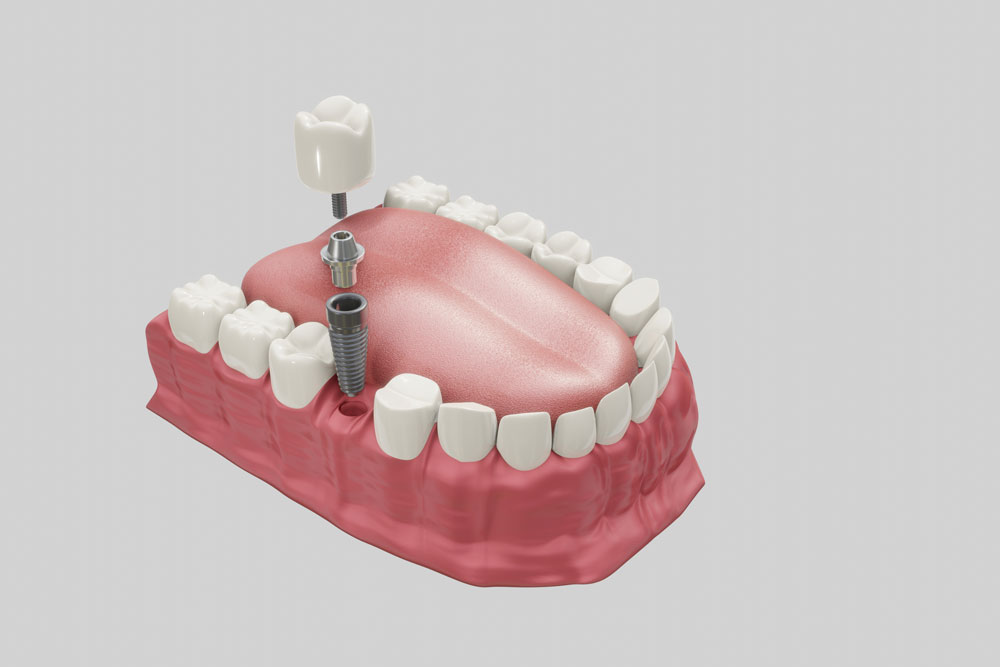

Dental implants replace missing tooth roots and provide support for crowns, bridges, or dentures. For suitable candidates, they offer a stable foundation that can improve chewing and preserve jawbone. Here is an overview of dental implants and their potential benefits:
Implant Options
Dental implant treatment is not a single procedure. Providers tailor the approach to the number of missing teeth and the condition of the jaw, and the restoration type varies accordingly. The two main categories are individual dental implants and full-arch implants.
Single-Tooth and Multiple-Tooth Implants
A single implant replaces one missing tooth with one post and one crown. When several teeth are missing in a row, a dentist may use two or more implants to support a bridge that spans the gap. This approach leaves neighboring teeth untouched, and it keeps each restoration independent of natural teeth.
Full-Arch Options
Full-arch treatment replaces all teeth in the upper or lower jaw. The All-on-4 method uses four implants to anchor a complete set of fixed teeth, while other techniques use five, six, or more implants. Patients who wear removable dentures sometimes explore this option, as the replacement teeth remain attached. A provider determines the number of implants based on bone volume and bite needs.
Benefits of Implants
Dental implants offer several potential benefits. Results vary from person to person, and a dental provider can explain how each point applies to your situation. Patients often evaluate the following factors when exploring options:
- Stability: Implants anchor in the jawbone, so replacement teeth stay in place while you speak and eat.
- Appearance: Dental labs custom-shade and shape crowns and full-arch prostheses to match the look of natural teeth.
- Jawbone Concerns: The jaw tends to lose volume after tooth loss, and implants occupy the space where natural roots once sat.
- Protection of nearby teeth: Implants stand on their own, so the dentist doesn’t need to reshape healthy teeth to support a bridge.
Suitability and Treatment Needs
Not every patient is an immediate candidate for dental implants. A dentist evaluates your gum health, jawbone volume and density, and medical history before recommending treatment. Imaging shows the exact shape of the bone, and this information guides the placement plan. Smoking, uncontrolled diabetes, and certain medications affect healing, so your provider will ask about these factors.
Some patients need preparatory procedures before implant placement. A bone graft adds material to areas where the jaw has thinned, while a sinus lift creates space in the upper jaw for an implant. These steps extend the overall timeline. Your provider will outline each step during the consultation, and you can ask questions about timing and recovery.
Placement and Recovery
Implant treatment follows a defined sequence. First, the surgeon places the post in the jawbone under local anesthesia or sedation. The bone then bonds with the implant over roughly three to nine months; once this bonding is complete, the dentist attaches the abutment and the final restoration. Patients commonly report swelling and soreness for several days after placement. Your provider will give specific instructions about diet, discomfort management, and oral hygiene, and following them closely can support a smooth recovery.
Learn More About Dental Implants
Dental implants replace missing teeth with fixed restorations anchored in the jawbone. Proper care is fundamental for the success of implants. This includes following a strict recovery plan and adopting long-term care habits like daily brushing, flossing, and regular dental checkups. A healthy lifestyle, including a balanced diet and avoiding smoking, can support better overall outcomes. To learn more about dental implants, contact a qualified dentist near you to schedule your appointment today.
