
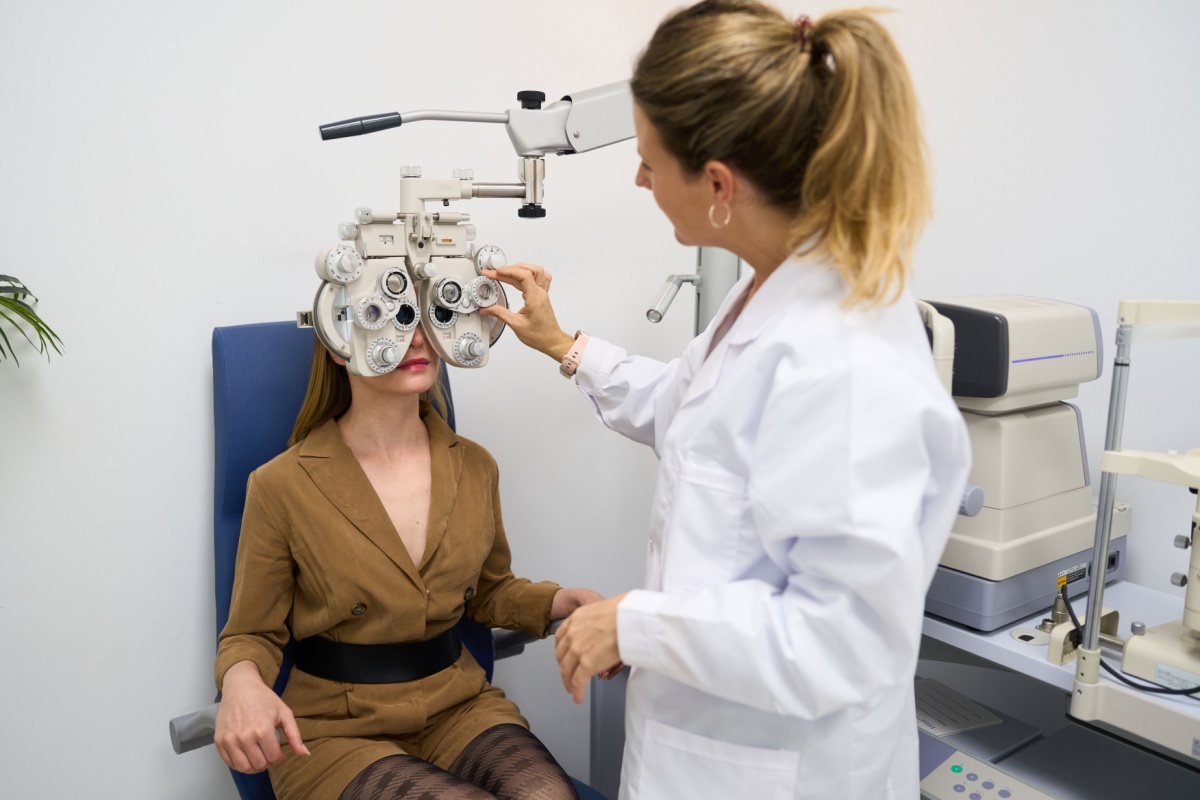

A comprehensive eye exam checks your glasses prescription, and it also provides clues about your overall health. Your doctor dilates your pupils with drops, and a special lens shows the retina, blood vessels, and optic nerve. Since these vessels link to your whole circulatory system, they offer a direct view of your health. This is how eye exams help detect other medical conditions:
Diabetic Conditions
When blood sugar stays high over time, it damages the tiny blood vessels in the retina. This condition goes by the name diabetic retinopathy. Early stages may cause no symptoms, so many people learn about the damage during a routine exam. Your eye doctor looks for several specific signs that indicate diabetes or poorly controlled blood sugar:
- Microaneurysms: small bulges in weak vessel walls
- Retina hemorrhages: spots of blood leaking into the retina
- Exudates: yellow deposits of fat and protein from leaky vessels
- Edema: swelling in the central retina that blurs fine detail
Numerous Cancers
Some cancers start inside the eye, and others spread there from different parts of the body. Eye exams can help you catch them. Ocular melanoma, which starts in pigment cells, is a major eye cancer in adults. It typically appears as a dark spot or raised area behind the iris. Your doctor may photograph the spot, and repeat images show any changes in size or shape.
Breast and lung cancers sometimes spread to the eye’s choroid layer. In children, doctors might check for retinoblastoma, which may show up as a white glow in the pupil. Parents sometimes notice this glow in flash photos, but an eye exam confirms the cause. Lymphoma and leukemia may also leave signs in the retina or surrounding tissue.
When a tumor grows near the brain, it may press on the optic nerve or visual pathways. Swelling of the optic disc points to raised pressure inside the skull, and the medical term is papilledema. Pituitary tumors may cause gradual loss of side vision. If your exam reveals these findings, your eye doctor typically refers you for brain imaging.
High Blood Pressure
High blood pressure often has no symptoms, but it leaves clear marks on retinal blood vessels. This pattern is called hypertensive retinopathy. As pressure stays elevated, the vessel walls thicken and narrow. Your eye doctor checks for the following signs, and severe findings may prompt a same-day referral:
- Narrowed arteries: thin, straight vessels with a bright “copper wire” look
- Arteriovenous nicking: spots where a stiff artery pinches a vein it crosses
- Optic disc swelling: a sign of dangerously high pressure
Cardiac Issues
Your retina gives clues about your heart and arteries. Small cholesterol fragments sometimes break off from plaque in the neck arteries, and they lodge in retinal vessels. These bright specks typically appear before a person notices any symptoms. Since they signal carotid artery disease, your eye doctor may recommend an ultrasound of your neck arteries.
Schedule Eye Exams Near You
Many eye doctors recommend a dilated exam every one to two years, and people with diabetes need one yearly. Bring a list of your medications, and tell your doctor about any family history of heart disease or cancer. If you notice sudden vision changes, flashes, or a curtain over your sight, call your eye doctor right away. Ask for a copy of your results to share with your primary care doctor.
