
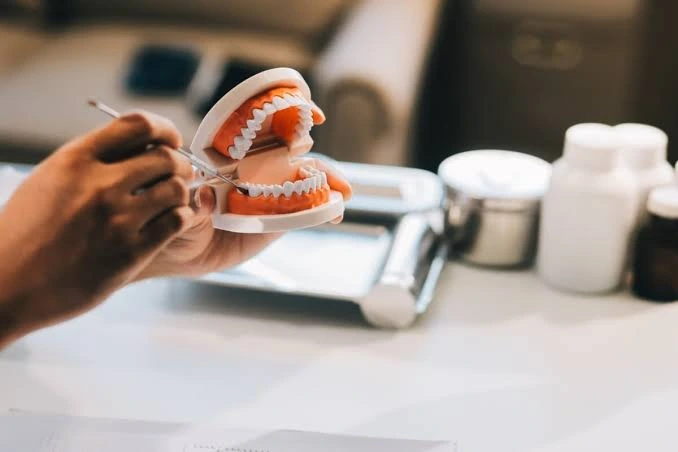

Adjusting to new dentures may take time as the mouth adapts to changes in speaking, eating, and daily oral care. Following proper care instructions and developing helpful habits can improve comfort and make the transition easier. Here are some practical tips for adjusting to new dentures:
Manage Early Discomfort
Mild soreness and extra saliva are common during the first few days with new dentures. Your gums and cheeks are adjusting to a new object, and this response usually eases as the days pass. The following tips can help you stay comfortable while your mouth adapts:
- Wear them as directed: Your dentist may suggest a wearing schedule, and following it helps your mouth adjust steadily.
- Rinse with warm salt water: A gentle salt-water rinse can soothe tender gums and keep the area clean between meals.
- Eat soft foods first: Foods like yogurt, eggs, and cooked vegetables are easier to manage while you build confidence.
- Take short breaks if advised. Removing your dentures at recommended times rests your gums and reduces pressure points.
- Track sore spots. Note any spot that remains painful because that detail helps your dentist make precise adjustments.
Practice Eating and Speaking
Eating with new dentures takes practice, and starting slowly builds the muscle control you need. Cut food into small pieces, chew evenly on both sides, and avoid biting hard items with your front teeth. As you get more comfortable, you can add firmer foods to your meals, and this gradual approach makes chewing more natural.
Speaking may feel different at first, since your tongue and lips are learning a new position. Reading aloud is a helpful exercise, and repeating tricky words trains your mouth to form clear sounds. If your dentures shift while you talk, gently bite down and swallow to reset them.
Clean and Store Dentures Properly
Good daily care keeps your dentures fresh and helps them last. Cleaning removes food particles and bacteria, while proper storage protects the appliance’s shape. Handle your dentures over a folded towel or a filled sink because a soft surface reduces the risk of damage if they slip.
Daily Cleaning
Clean your dentures at least once a day to remove buildup. Use a soft denture brush and a non-abrasive cleaner, and rinse the appliance after every meal when possible. Avoid regular toothpaste, since it can scratch the surface and create spots where bacteria collect. Brush your gums, tongue, and any remaining teeth to keep your whole mouth clean.
Overnight Storage
Dentures often need to stay moist when you are not wearing them. Place them in water or a denture-soaking solution, and follow the product instructions for the correct soaking time. Dry conditions can warp some materials, so keep the appliance covered in liquid overnight. Rinse your dentures well before you put them back in your mouth.
Recognize Problems That Require Attention
Some issues call for a dentist visit. Persistent pain, loose fit, or difficulty chewing may signal that your dentures need an adjustment. Pain that lasts beyond the early adjustment period may point to an uneven fit, and loose or slipping dentures often affect eating and speaking.
Visible damage weakens the appliance, so avoid do-it-yourself repairs and schedule a check instead. Redness or swelling that does not resolve deserves prompt professional review. Regular checkups also matter; your dentist can inspect the fit, examine your gums, and clean the appliance thoroughly.
Schedule Your Dentures Evaluation Today
Adjusting to new dentures requires managing early discomfort and practicing how you eat and speak. It also includes cleaning and storing the appliance with care, and watching for signs that need professional attention. Addressing minor concerns early can prevent major complications later. Contact a qualified dentist near you to schedule your dentures evaluation today.
