
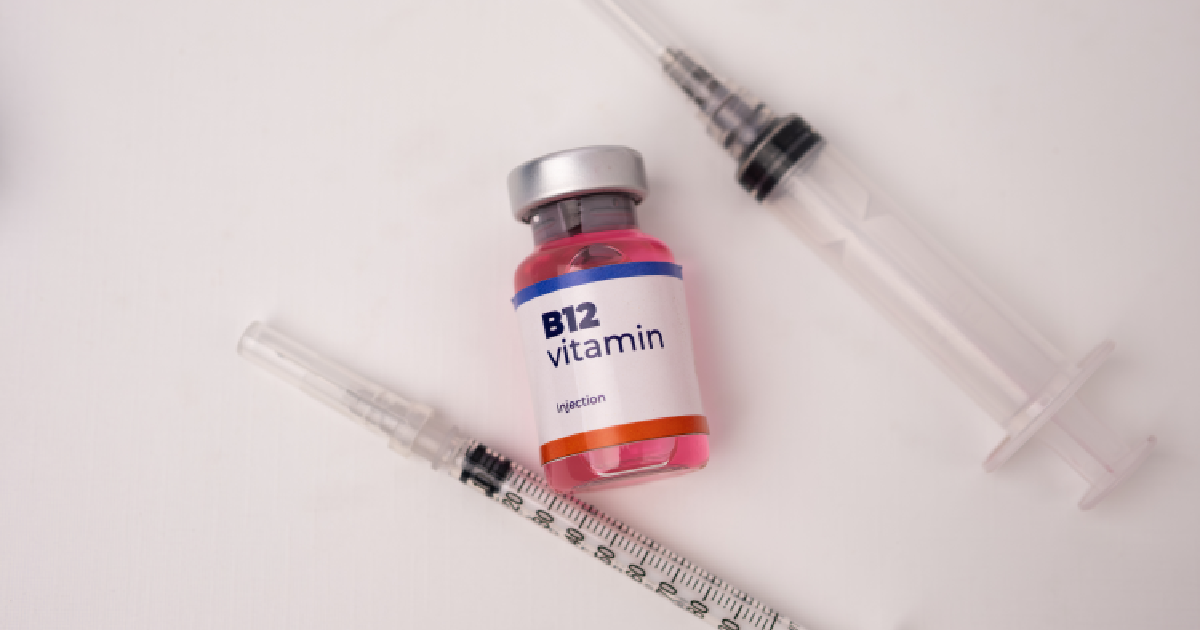

Vitamin B12 injections deliver a concentrated dose of cobalamin directly into the bloodstream. Because this route bypasses digestive absorption limits, the body can use the nutrient more readily. For athletes, B12 supports red blood cell production and energy metabolism, and it also maintains nervous system function. These factors influence endurance, recovery, and overall exercise capacity. Here is more information on how these injections support athletic performance:
How Do Vitamin B12 Injections Work?
Vitamin B12 injections introduce the nutrient directly into muscle tissue. From there, it enters the bloodstream without passing through the digestive tract. Oral B12 depends on stomach acid for absorption; this process can be inefficient for people with gastrointestinal conditions, dietary restrictions, or age-related absorption decline. Since injections bypass the digestive system, they remove that barrier entirely.
Once in the bloodstream, B12 travels to cells throughout the body and supports several functions:
- DNA synthesis
- Red blood cell formation
- Nervous system function
A provider at a metabolic medical center typically evaluates bloodwork before recommending injections, since dosing and frequency depend on individual deficiency levels and health history.
How Is Athletic Performance Supported?
Athletic performance depends on oxygen delivery, energy production, and nervous system coordination; B12 supports each. The vitamin supports the formation of healthy red blood cells. These cells carry oxygen to working muscles during exercise. When oxygen delivery is limited, athletes may experience fatigue, reduced endurance, and slower recovery between sessions.
B12 also supports the metabolism of fats and carbohydrates, which are the two primary fuel sources during sustained physical activity. Without adequate B12 levels, these metabolic pathways become less efficient, and this may lead to early fatigue during training or competition. B12 also supports nervous system function. Strong nerve signaling supports coordination, reaction time, and muscle control, all of which factor into athletic output.
B12 helps cells convert food into usable energy; it also supports the production of compounds that regulate homocysteine, an amino acid that can cause problems at high levels. Intense training raises the body’s need for nutrients involved in tissue repair and energy production. Over time, this higher demand can deplete B12 stores. Routine bloodwork helps identify low B12 levels. If a deficiency is found, a provider will decide whether injection therapy is appropriate, depending on the deficiency’s severity.
What Are the Benefits?
Athletes with a diagnosed B12 deficiency may notice measurable improvements after beginning injection therapy. Potential benefits include reduced fatigue, improved stamina during training, and faster recovery between workouts. B12 supports red blood cell production, so patients with low baseline levels may also see improvements in oxygen-carrying capacity. These improvements support better performance during endurance-based activities, which depend heavily on efficient oxygen delivery.
B12 supports cognitive function; athletes who maintain healthy B12 levels may experience sharper focus and more stable energy throughout the day. These effects support consistent training habits. They also help athletes stay prepared for competition. Injections may produce more noticeable results than oral supplementation in patients with a deficiency, because the delivery method avoids absorption challenges in the digestive system. Consulting a professional helps determine whether this treatment option is necessary.
Learn More From a Professional
Vitamin B12 injections offer athletes a direct way to address deficiencies that may be limiting performance, recovery, or overall energy levels. The treatment supports several biological processes tied to endurance and metabolic efficiency; it is a valuable option for athletes who suspect low B12 levels are holding back their training. A metabolic medical center can evaluate bloodwork and build a treatment plan suited to individual training demands. If you suspect a deficiency, schedule a consultation with a provider to discuss testing options.
