
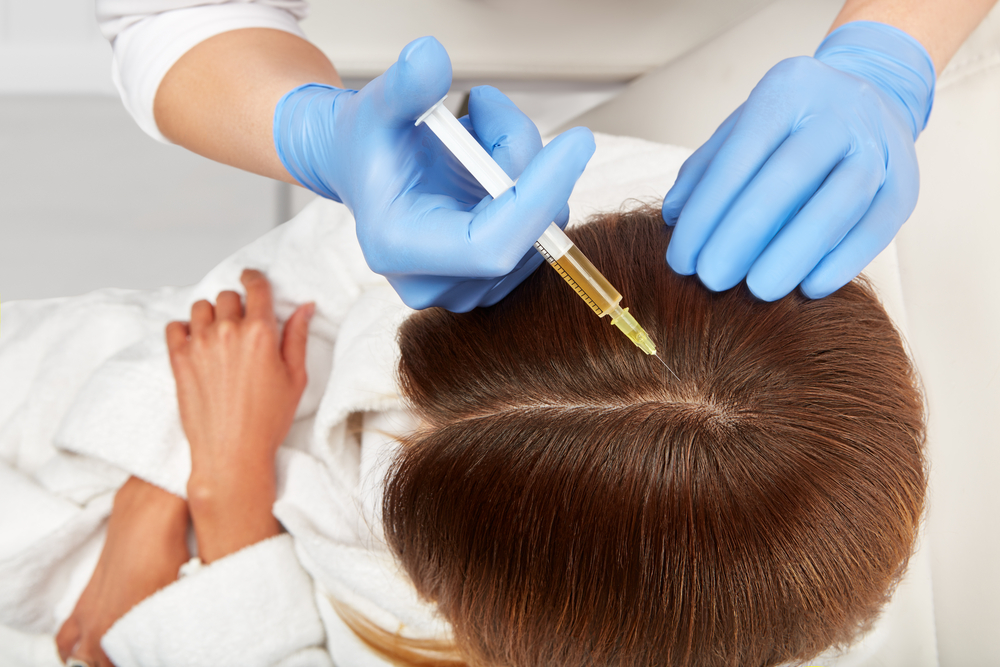

Choosing a hair restoration treatment starts with understanding the cause of hair loss and the available options. PRP for Hair Loss uses platelet-rich plasma prepared from your blood, but its suitability depends on your diagnosis, treatment goals, and individual health factors. Here is more information on PRP hair treatment and if it’s right for you:
Hair Loss Assessment
The type and cause of your hair loss affect whether PRP for hair loss is right for you. Androgenetic alopecia, also called pattern hair loss, is a common form that develops gradually over time. Providers often discuss PRP for this type, but other causes require different approaches. Hair loss linked to stress, thyroid conditions, nutritional gaps, or certain medications often requires a separate plan.
A specialist examines your scalp, reviews your medical history, and asks about family patterns of hair loss. Some providers order blood tests, and others use a magnifying tool to study hair follicles. This evaluation identifies the cause before you commit to any treatment.
Benefits and Limitations
Every treatment has strengths and drawbacks. Reviewing both helps you set realistic expectations, and it prepares you for a productive conversation with a provider. The following sections outline what PRP offers and where it falls short.
Potential Benefits
PRP uses material from your body, so it does not involve synthetic drugs or donor tissue. The procedure requires no incisions or stitches. Some people return to daily activities shortly after an appointment, although the scalp sometimes feels tender for a day or two. PRP can also be combined with other approaches, such as topical or oral medications a provider prescribes.
Key Limitations
Results vary from person to person, and no provider can guarantee hair regrowth. Providers generally recommend PRP for people who still have active follicles, so it is less suitable for completely bald areas. The treatment may also require multiple sessions, depending on the specialist’s recommendations.
Treatment Commitment
PRP for hair loss is not a one-time procedure. Treatment plans often include several initial sessions followed by ongoing maintenance, and the exact schedule depends on your provider’s protocol. Review the following factors before you begin:
- Initial sessions: Providers often schedule three to four sessions spaced about four to six weeks apart.
- Maintenance visits: Follow-up treatments generally occur every four to six months after the initial phase.
- Time frame for changes: Visible changes, if they occur, often take several months to appear.
- Pre-treatment and post-treatment care: Providers give instructions about hair washing, styling products, and certain medications around each session.
Treatment Options Comparison
PRP is one of several approaches to hair loss. Topical minoxidil is an over-the-counter solution that you apply directly to the scalp. Oral medications such as finasteride require a prescription. Low-level laser therapy uses devices that emit light, and hair transplant surgery relocates follicles from denser areas to thinning ones.
Some people choose PRP as a standalone option, while others combine it with medications or laser therapy. A combined plan addresses hair loss from more than one angle, but it also requires more time. A hair loss specialist reviews your goals and medical history before recommending a plan.
Explore PRP for Hair Loss
PRP hair treatment is a nonsurgical option that uses components of your own blood. Its suitability depends on your type of hair loss, expectations, and ability to commit to repeat sessions. Compare PRP with medications, laser therapy, and surgery, and contemplate whether a combined plan fits your goals. To explore PRP hair treatment, contact a qualified hair loss specialist near you to schedule your consultation today.
