
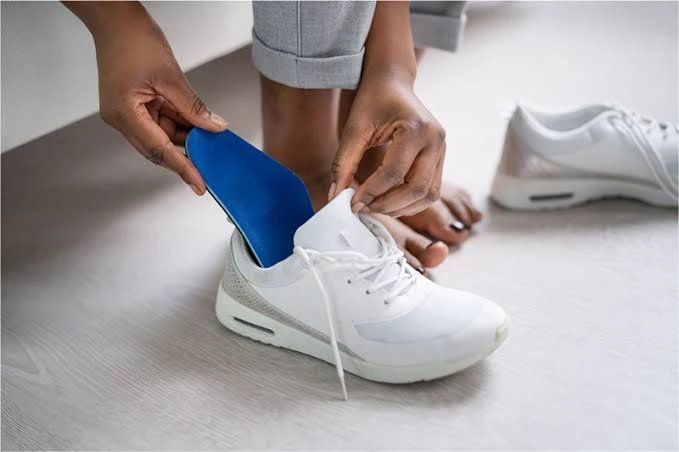

Orthotics are shoe inserts, and they’re designed to support the structure and movement of your feet. Some come off the shelf, but custom versions match the exact contours of each foot. When a podiatrist prescribes custom orthotics, the process usually starts with a gait assessment and a foot scan. This is how these devices can help with athletic performance:
Redistributing Weight
When you run, cut, or jump, your feet absorb significant physical forces. Orthotics spread this load across a wider area of the foot. Without that support, certain spots take repeated pressure, and they may develop pain or calluses. Pressure points include these areas:
- The heel during landing
- The ball of the foot during push-off
- The big toe joint during pivots and sprints
- The outer edge of the foot during lateral moves
Correcting Biomechanical Issues
Every foot has its own structure, and small irregularities affect the knees, hips, and lower back. If your arch flattens too much during each step, your ankle rolls inward. Podiatrists call this pattern overpronation. It typically shows up as wear along the inner edge of your shoes.
Since high arches absorb little shock, they can roll outward and pass extra force to the ankles. Supination describes this outward roll. Both patterns alter joint alignment, and repeated misalignment may contribute to strain in the shins, knees, or hips.
Some orthotics aim to limit inward rolling, and others counter outward rolling. These features guide the foot toward a more neutral position. When your foot stays neutral, your knees and hips often track in better alignment during repetitive movement.
Improving Gait
Gait refers to the pattern of your walking or running stride. While small flaws seem minor, they repeat thousands of times during a single run. Orthotics guide the foot through each phase of the stride, and this guidance may produce a steadier rhythm. A steady rhythm may help you hold your form late in a game or race.
Before they design your inserts, many sports podiatrists film you running on a treadmill. The footage shows each phase of your stride, and it highlights timing issues at heel strike or toe-off. A balanced stride spreads effort evenly between both legs. Follow-up visits track changes in your stride over several weeks.
Cushioning Painful Areas
Some athletes need extra padding, and orthotics add cushioning beneath sensitive areas. Podiatrists choose materials based on your sport, weight, and symptoms. If you have a sore heel or forefoot, softer foams may reduce direct pressure on that spot. Orthotics address these conditions:
- Plantar fasciitis
- Heel spurs
- Metatarsalgia
- Morton’s neuroma
- Sesamoiditis
Cushioning materials wear down with regular training. Athletic orthotics typically last a few years, and heavy mileage shortens that range. If the padding feels flat or your old pain returns, ask your podiatrist about a replacement pair.
Schedule a Visit for Orthotics
A podiatrist reviews your feet, stride, and training routine during an orthotics visit. The exam includes a gait review, and the lab usually makes custom inserts within a few weeks. Bring your athletic shoes and any old inserts to the appointment. If you notice foot, ankle, or knee pain during sport, schedule a visit to discuss your options.
