
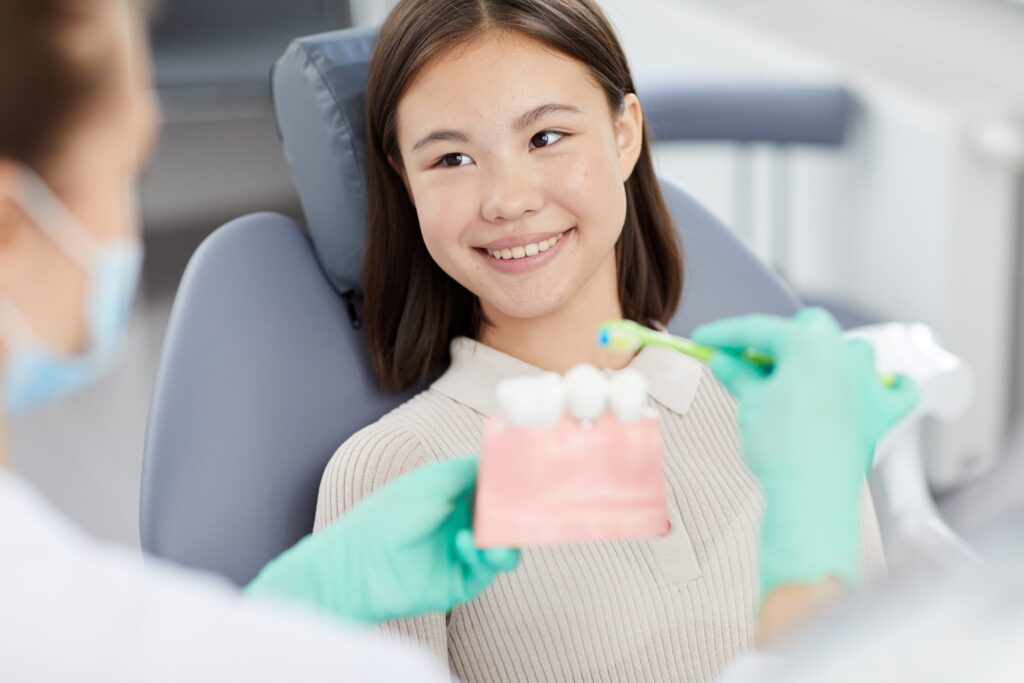

A dental crown covers a damaged or weakened tooth to restore its shape, function, and appearance. Although crowns are designed to withstand everyday chewing, their longevity depends on oral hygiene, eating habits, and routine dental care. By maintaining healthy dental habits and attending regular checkups, patients may reduce crown damage and support long-term oral health.
Brushing and Flossing
Plaque and food particles may accumulate around dental crowns, particularly where the restoration meets the natural tooth and gum line. Brushing with a soft-bristled toothbrush helps remove buildup without placing unnecessary pressure on the crown or surrounding gums. Daily flossing also removes debris between teeth, supporting gum health and reducing the risk of decay near crown margins. Because proper oral hygiene supports the surrounding tooth structure, patients should maintain consistent brushing and flossing routines.
Avoiding Hard and Sticky Foods
Dental crowns withstand normal chewing pressure, but certain foods may increase the risk of cracking, chipping, or loosening the restoration. Hard foods place concentrated pressure on crowns, while sticky foods pull against the restoration during chewing. Because eating habits affect crown durability, patients should make adjustments that reduce unnecessary stress on crowned teeth. Helpful dietary habits include:
- Cutting hard foods: Slice firm fruits and vegetables into smaller pieces to reduce pressure when biting.
- Avoiding ice chewing: Refrain from chewing ice, which may damage crowns and natural teeth.
- Limiting sticky candies: Reduce consumption of caramel, taffy, and similar foods that pull against crowns.
- Choosing softer snacks: Select foods that require less chewing force to minimize stress on dental restorations.
- Chewing carefully: Avoid biting directly into particularly hard foods with crowned teeth.
Scheduling Dental Checkups
Routine dental checkups allow dentists to examine crown placement, stability, and the surrounding tooth structure. Although a crown may appear secure, decay or loosening sometimes develops beneath the restoration. Professional cleanings also remove plaque and tartar from areas that daily brushing and flossing may miss.
During appointments, dentists evaluate gum health, neighboring teeth, and changes in bite alignment. Shifting teeth or uneven chewing pressure may affect how a crown fits and functions over time. Because regular examinations help identify developing concerns, dentists recommend adjustments or additional treatment when necessary.
Protecting Crowns From Teeth Grinding
Teeth grinding, also known as bruxism, places repeated pressure on dental crowns and surrounding teeth. This pressure may gradually wear down crown surfaces or contribute to chips, fractures, and jaw discomfort. Because grinding often occurs during sleep, patients may not recognize the habit until symptoms develop.
Daytime clenching also affects crown durability, particularly during periods of stress or concentration. Dentists examine tooth wear, jaw tenderness, and crown condition to identify possible signs of grinding. Depending on the findings, recommended preventive habits include:
- Wearing a custom nightguard
- Recognizing daytime jaw clenching
- Relaxing jaw muscles regularly
- Avoiding unnecessary tooth contact
- Attending routine dental examinations
Schedule Your Dental Check-up Today
Dental crowns require consistent care to maintain their function, appearance, and structural stability over time. Regular brushing, daily flossing, and avoiding hard or sticky foods help reduce unnecessary wear. Because teeth grinding and changes in bite alignment may affect crown durability, routine dental examinations support ongoing maintenance. Schedule a dental appointment today to evaluate your crown and discuss appropriate care recommendations.
