
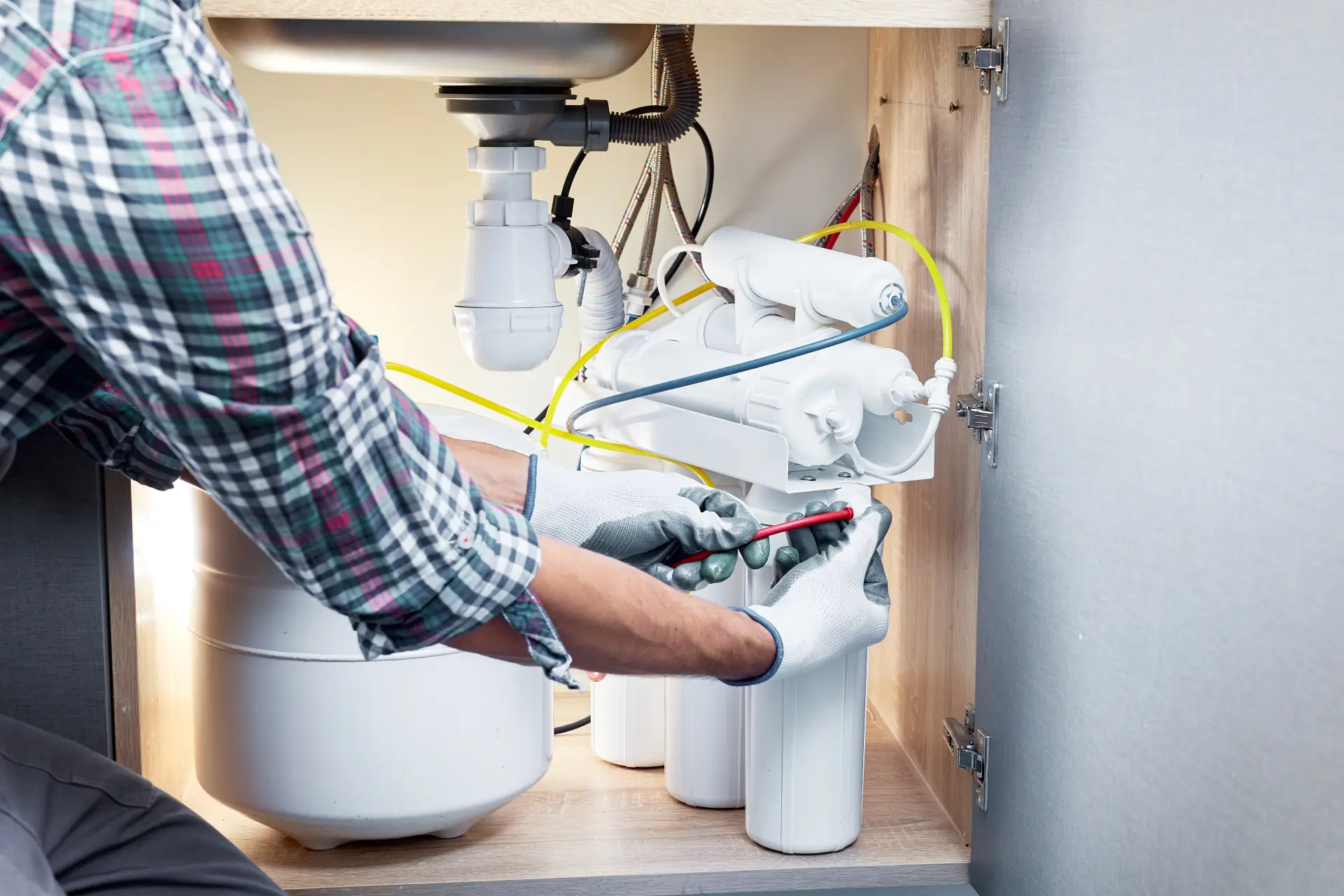

The presence of contaminants sometimes changes the characteristics of a water supply. These contaminants differ in size and composition, so filtration systems use specialized materials to target specific impurity categories. A water filter system combines different filtration technologies to reduce unwanted substances through multiple treatment stages. Here is how water filter systems help remove contaminants:
Identifying Water Contaminants
Water contains different substances that require specific filtration methods to reduce contaminants. Sediment affects water clarity, while chlorine and chloramine affect taste and odor characteristics. Filtration systems use specialized materials designed for specific contaminant categories. Chemical contaminants include volatile organic compounds (VOCs), pesticides, herbicides, and petroleum-related compounds. Specialized filtration media reduce these substances through targeted treatment processes. Microplastics and perfluoroalkyl and polyfluoroalkyl substances (PFAS) are also addressed by these filtration technologies.
Removing Impurities With Water Filters
A water filter system uses multiple filtration stages to reduce different contaminants. Water flows through ceramic filtration, catalytic carbon block, and advanced resins in sequence. The ceramic stage uses submicron filtration to reduce fine particles and microorganisms. Microorganisms addressed during this stage include:
- Cryptosporidium
- Giardia Lamblia cysts
- E. coli
- Salmonella
- Pathogenic bacteria
Catalytic carbon block and advanced resins reduce chlorine, chloramine, VOCs, pesticides, herbicides, heavy metals, microplastics, and PFAS. This stage reduces chemical contaminants before water reaches the final carbon filtration stage. Compressed coconut carbon provides the final filtration stage, and this reduces remaining odors and improves water taste.
Using Point-of-Use Solutions
Point-of-use filtration supplies purified water at a designated outlet used for drinking and cooking. Countertop and under-counter models provide different installation options, and both connect directly to the water supply. When installing these models, a factor to evaluate is how much space is needed, and many models are designed to be compact.
Water passes through the filtration cartridge immediately before dispensing, so purification occurs at the point of use. The system operates through water pressure without electricity or storage tanks. Countertop models mount on the counter, whereas under-counter models install beneath the sink.
Improving Water Quality
Whole-house purification systems treat water before it reaches different areas of a property. This configuration provides treated water for drinking, bathing, household activities, and appliance use through one centralized system. The system addresses water entering the property rather than filtration at a single outlet.
Whole-house systems use layered filtration technologies to treat incoming water throughout the property. Kinetic Degradation Fluxion (KDF) filtration media provides another method for chlorine reduction. A high-density garnet bed captures carbon fines and remaining sediment during filtration.
Scale-control technology supports scale prevention, and magnetic field technology provides soft-water characteristics without salt or electricity. The system distributes treated water through connected fixtures after filtration. This allows multiple areas of the property to receive treated water.
Explore Water Filter Systems
Effective contaminant reduction requires filtration systems that match household water treatment requirements. Point-of-use, whole-house, and shower purification systems address different applications, and each system uses specialized filtration technologies. Professional system selection improves filtration performance because different water conditions require their own purification approaches. Contact water purification specialists today to select a water filter system suited to your water treatment needs.
