
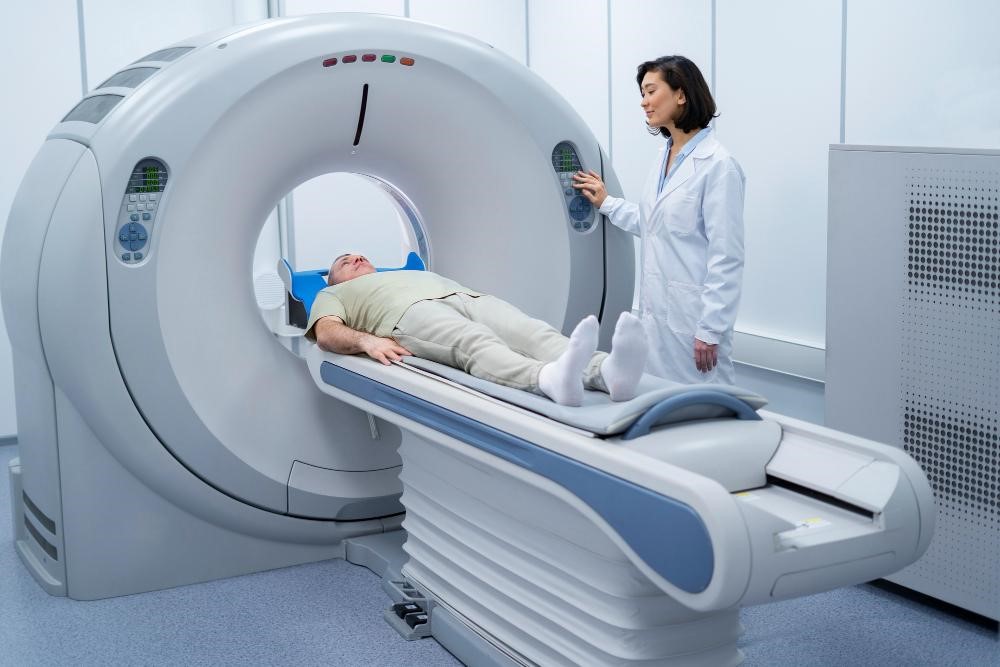

A radiologist is a physician who specializes in diagnosing and treating medical conditions using imaging technology. These physicians interpret images to identify abnormalities, and they may collaborate with other physicians to guide treatment decisions throughout a patient’s care. Because their work supports earlier diagnosis and more accurate treatment planning, radiologists play a central role in improving overall health outcomes. Here is more information on radiology:
What Is a Radiologist?
A radiologist is a licensed physician trained to diagnose and treat conditions using medical imaging. Subspecialties include neuroradiology, musculoskeletal imaging, and interventional radiology; these subspecialties allow radiologists to develop deeper expertise in specific imaging domains. Their specialized training helps them detect subtle imaging patterns that may otherwise go unnoticed, which is key to early detection. Radiologists work with referring physicians, surgeons, and specialists, helping build a more complete understanding of a patient’s health.
What Is Their Role?
When reviewing medical images, a radiologist’s primary responsibility is to interpret the findings accurately and communicate the results to the referring doctor. This process involves reviewing scans for abnormalities, measuring changes over time, and determining whether further testing is needed. Radiologists also select the imaging method suited to a patient’s symptoms; they balance accuracy with safety and comfort to guide that decision.
Some providers perform image-guided procedures directly, which extends their role beyond interpretation. These interventional radiologists use imaging to guide biopsies, place catheters, or treat conditions like blocked arteries without traditional surgery, making complex interventions less invasive. Because imaging intersects with many areas of medicine, radiologists stay familiar with a broad range of clinical conditions, and collaboration makes sure that imaging findings are accurately integrated into each patient’s overall care plan.
What Services Do They Offer?
Radiologists oversee a wide range of diagnostic and therapeutic services, and the modalities they use vary by clinical need. When evaluating different medical conditions, these healthcare specialists commonly use imaging methods such as X-rays, computed tomography (CT), magnetic resonance imaging (MRI), ultrasound, and mammography. Each method serves a distinct purpose. X-rays detect structural abnormalities such as broken bones, while MRI examines soft tissue.
Some radiologists offer specialized interventional procedures. Prostate artery embolization (PAE) is a minimally invasive procedure that treats benign prostatic hyperplasia (BPH) by reducing blood flow to the prostate; this reduction in blood flow decreases the prostate’s size while alleviating urinary symptoms. It is performed under imaging guidance, which allows radiologists to navigate with precision.
Uterine fibroid embolization (UFE) follows a similar principle; the procedure targets the blood supply to uterine fibroids, reducing their size and relieving associated symptoms such as heavy menstrual bleeding and pelvic pain. Because it is performed under imaging guidance, it minimizes the need for open surgery. Both PAE and UFE represent the expanding role of radiologists in delivering targeted, image-guided treatments.
What Are the Benefits?
Radiology offers several advantages that extend beyond simply producing an image. Key benefits include:
- Early detection: Imaging can identify conditions, including certain cancers, before symptoms appear.
- Precision in treatment planning: Detailed imaging data gives physicians specific information about a condition’s size, location, and progression.
- Ongoing monitoring: As imaging technology advances, radiologists can track how conditions change over time.
Learn More About Radiology
Radiologists play a valuable role in many stages of medical care, from initial diagnosis to ongoing treatment monitoring. Their training in interpreting imaging and performing minimally invasive procedures allows other physicians to make informed decisions about patient care; understanding this role helps patients prepare for the imaging process. If you are looking to learn more, consult a radiologist.
