
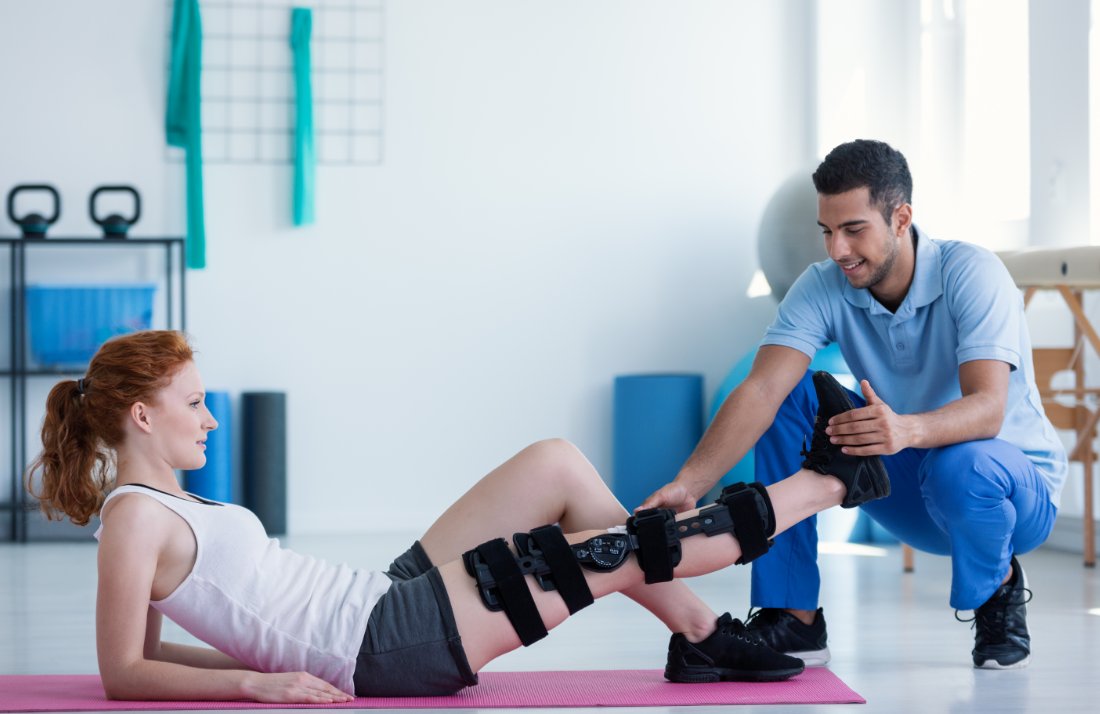

Personalized physical therapy treatment helps you recover from a sports injury. A professional is trained to diagnose, manage, and treat your sports injury so you can return to your sport. They have an in-depth knowledge of the human body and how it functions during different types of physical activity. The following are ways in which physical therapists address sports-specific injury:
Assess Sport Movement
Your ability to participate in sports depends on proper movement patterns. When you experience an injury, your movement patterns change, which can affect your performance and even worsen your injury. Whether you are sprinting, jumping, throwing, or swinging a bat, a therapist will first evaluate your specific sport movements. They use this assessment to identify any imbalances, weaknesses, or faulty biomechanics contributing to your injury. This helps them target treatment.
An injury likely changes mechanics, so assessing movement patterns can help predict potential problems. By correcting these patterns, you can reduce the chance of re-injury and improve your athletic performance. When you return to your sport, the therapist will continue to monitor your progress and make adjustments as needed to support your success.
Restore Joint Mobility
Muscle or tendon strains can cause pain and limit your range of motion. Without proper care, you may avoid using the affected area to prevent further discomfort. If left untreated, restricted mobility affects sport performance and body mechanics. Physical therapy exercises aim to restore joint mobility and improve flexibility, allowing you to move comfortably without pain.
A therapist targets the involved joint and surrounding structures to ease movement limitations. The therapist assesses your condition and designs an individualized plan to improve mobility. Exercises may include stretching, range-of-motion work, and strengthening to restore normal movement.
As you progress, your therapist may introduce functional movements to prepare you for daily activities and sports. You receive hands-on training and instruction on proper movement patterns to prevent future injuries. With consistency, you increase flexibility and endurance.
Rebuild Sport Strength
After an injury, it’s normal to lose some muscle strength and endurance; your muscle groups likely weakened because of the injury and immobility. Physical Therapists match exercises to your specific injury and progress you through the appropriate stages of recovery. Some exercises include low-impact strength training, using resistance bands and weights. These activities help rebuild strength in affected areas while promoting proper movement patterns to prevent future injuries. You don’t have to wait until you’re fully recovered to start strength training, but your therapist guides you on when it’s safe to do so.
Reduce Pain Sources
Pain is usually a symptom of injury, and a physical therapist can help you manage it during your recovery. They examine your injury and assess how it affects your pain levels. Needling and laser therapy are some of the techniques that they use to reduce your pain. After reviewing your medical history and injury type, they develop a customized treatment plan to specifically target the sources of your pain.
Find a Physical Therapist
Your first step towards recovery is to collaborate with a professional physical therapist. They help you resume daily activities and reduce pain. Contact a physical therapist who specializes in sports injuries or musculoskeletal issues to support your recovery.
