
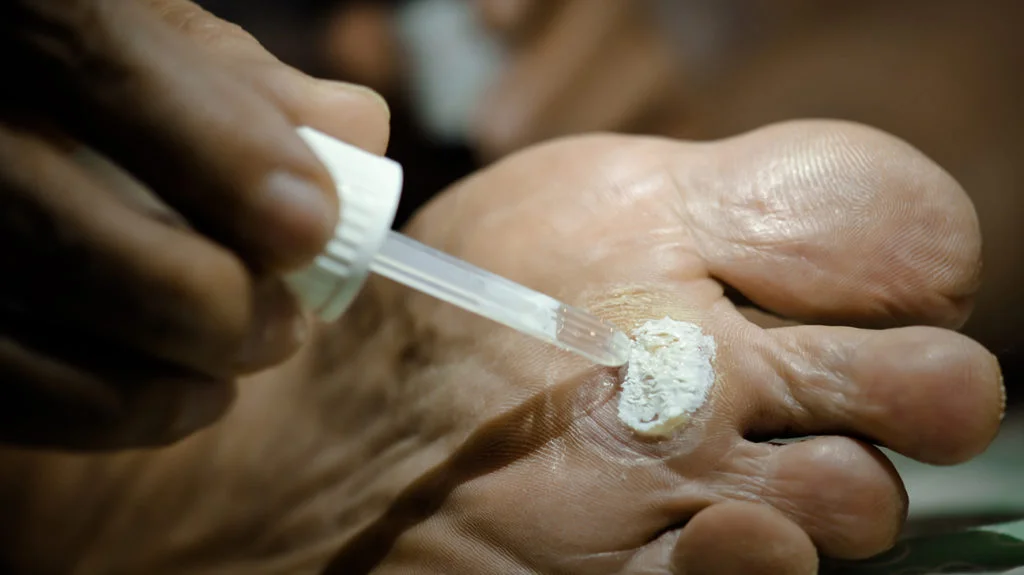

Plantar warts are small, rough growths that develop on the bottom of the foot, particularly on weight-bearing areas like the heel. Because pressure pushes them inward, they may appear flatter than warts on other parts of the body. Many also display tiny dark specks; these are small clotted blood vessels beneath the surface. A virus causes these growths, and while anyone may develop them, children and people with weakened immune systems tend to be more susceptible. Here’s more information about plantar warts and how to prevent them:
Identifying the Cause
Plantar warts stem from the human papillomavirus (HPV). Researchers have identified more than 100 HPV strains, but only a small number typically affect the feet, causing infection. This virus enters through tiny cuts or breaks in the skin, and it may take weeks or months before the wart becomes visible. Not everyone who encounters HPV develops a growth, since each immune system responds differently. Two people may walk the same pool deck with entirely different results. Because of this variation, prevention focuses on limiting exposure.
Recognizing Key Risk Factors
HPV thrives in warm, moist environments, so locker rooms, public showers, and pool decks all offer ideal conditions. The virus may survive on these surfaces for a significant period. Walking barefoot in these spaces puts your skin in direct contact with potentially contaminated floors, which raises your exposure risk.
Damaged or softened skin also plays a role. Dry, cracked heels give the virus a straightforward entry point, and small cuts from nail trimming serve the same purpose. Feet that stay sweaty for extended periods may soften, which leaves the skin more vulnerable to HPV. Certain groups face higher exposure overall. Children frequently walk barefoot in shared spaces, and athletes regularly use communal showers. People with weakened immune systems may also have a harder time resisting the virus.
Building Effective Prevention Habits
Protective footwear is a fundamental first step for preventing plantar warts. Wear flip-flops or shower sandals in gym showers, locker rooms, and around pools; this barrier keeps your skin off surfaces where HPV may linger. Pack a pair in your gym bag so you always have them ready.
Daily hygiene also supports healthy, intact skin. While no routine guarantees full protection, consistent habits can reduce exposure. Build these steps into your regular day:
- Wash your feet daily with soap and water
- Dry your feet thoroughly, including between your toes
- Change your socks at least once a day
- Moisturize dry or cracked heels to keep the skin intact
- Use your own nail clippers and clean them after each use
Avoid touching warts, whether they appear on your feet or someone else’s. If you come into contact with one, wash your hands promptly and keep any existing growths covered with a bandage. Avoid sharing shoes, socks, or towels, even with family members; these items provide a direct path for HPV transmission. Check your feet regularly for new or unusual growths. If a rough spot does not go away within a few weeks, schedule a visit with a podiatrist for a professional evaluation.
Find Treatment for Plantar Warts
HPV spreads readily through damp shared surfaces and direct contact, and when the virus enters small breaks in the skin, plantar warts may develop. Wear protective footwear in public areas, maintain daily foot hygiene, and avoid shared personal items as practical defenses. Start practicing these habits today, and see a podiatrist if you notice any unusual changes on your feet.
