
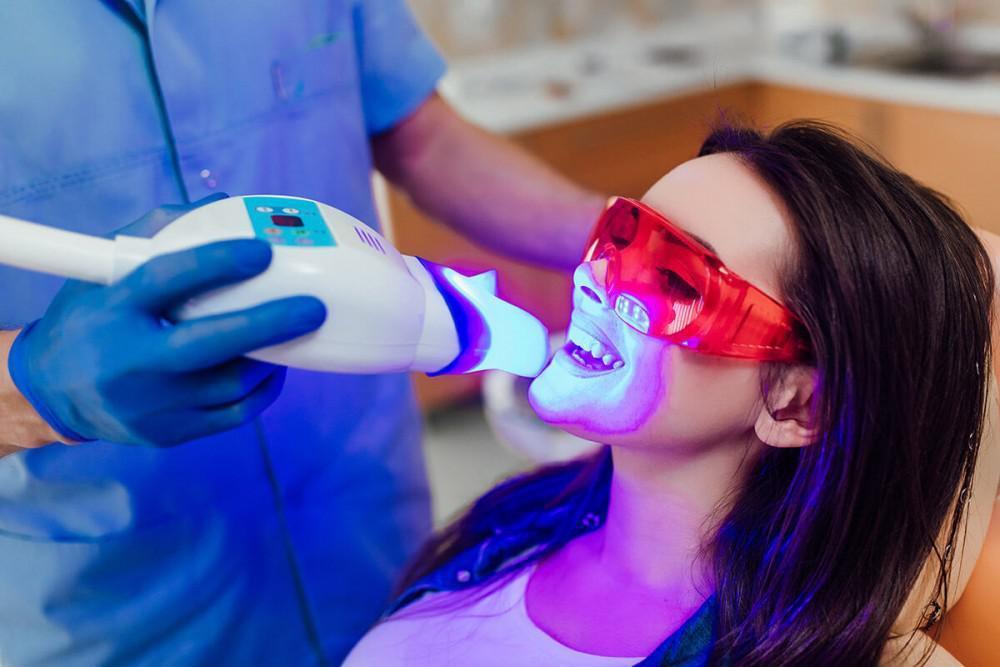

Professional teeth whitening is performed inside a dental office, and it targets stains on and below the enamel surface. Coffee, tea, wine, and red berries may cause these stains, and age adds to them over time. Here is more information on how the treatment works and what you may expect during a visit:
Professional-grade Solution
Professional teeth whitening gels contain higher levels of hydrogen peroxide than store-bought kits. Over-the-counter strips hold a low percentage of peroxide, but professional gels contain much more. Since the gel is stronger, a trained dental professional applies and monitors it. Home kits usually take one to two weeks of daily use.
Your dentist examines your teeth first, and they check for cavities, gum disease, or worn enamel. If the exam finds decay, your dentist may suggest treating it before whitening. This screening step aims to lower the risk of sensitivity.
Whitening gel does not change the color of crowns, veneers, or fillings, which keep their original shade. Your dentist reviews any existing dental work with you. Some patients replace older restorations after whitening, and others keep them.
Multiple Shades Brighter
Dentists measure tooth color with a shade guide before and after treatment. Many patients see a change of several shades after one visit, though results differ from person to person. Yellow stains may respond well, but gray stains from medication or injury may lighten less. Several factors affect how much your teeth lighten:
- The natural tooth color and enamel thickness
- The type and depth of your stains
- The number of whitening sessions
- The patient’s daily habits after treatment, such as coffee or tobacco use
Whitening results fade over time, and the pace depends on your diet and habits. Touch-up treatments help maintain the shade. In some cases, the dentist provides custom trays so that you can whiten at home between visits.
Isolated Tongue and Soft Tissues
Before the gel goes on, your dental team protects your gums and soft tissues. Strong peroxide may irritate the gums, so your dentist paints a resin barrier along the gumline. A curing light hardens the barrier in seconds. The barrier peels off in one piece after the session.
A cheek retractor holds your lips and cheeks away from your teeth. While the gel sits on your teeth, a tongue guard or cotton rolls keep your tongue away. This setup protects soft tissue, and it lets the dentist apply the gel evenly. Tell your dental team if anything feels uncomfortable.
Light-powered Activation
Some offices use a blue LED or laser light, and others rely on the gel alone. When the light shines on the gel, it may speed up the peroxide reaction. Research on the added effect of light shows mixed results. You may want to ask your dentist a few questions before your visit:
- Does your office use light activation?
- How many sessions does your plan include?
- How long does each session last?
- What steps reduce sensitivity after treatment?
Schedule Professional Teeth Whitening
If you want to learn whether whitening suits your teeth, start with a dental exam. Your dentist reviews your stain type and dental history, and you discuss treatment options together. Many offices offer online booking for whitening appointments. Bring your list of questions to the visit.
