
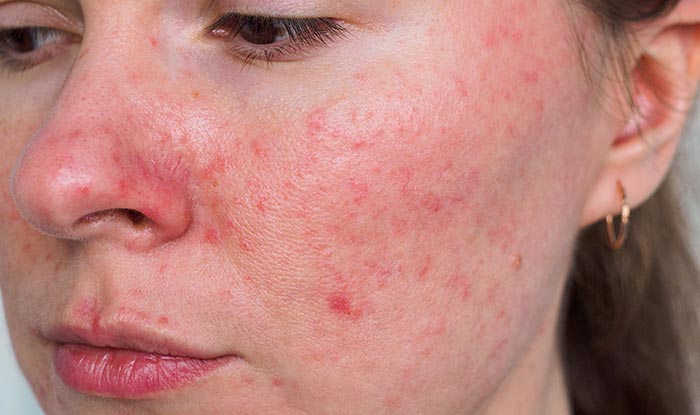

Rosacea commonly begins with frequent facial flushing or blushing. Visible veins and swollen bumps may develop, and some people also experience burning sensations or irritated eyelids. Because rosacea symptoms vary by subtype, a dermatologist can identify the condition and discuss available treatment options. Here is more information about recognizing signs of rosacea:
Recognizing Facial Redness Patterns
Frequent facial flushing is sometimes an early sign of rosacea. Redness commonly appears across the cheeks and nose, while other facial areas may also become affected. Because redness is able to appear differently across skin tones, a dermatologist evaluates the overall pattern alongside other symptoms.
Facial redness alone does not confirm rosacea. Dermatologists review accompanying symptoms, and patients may notice recurring flushing associated with certain activities or environmental factors. When redness becomes persistent or occurs repeatedly, a dermatology evaluation can provide more information about the underlying skin condition.
Spotting Visible Blood Vessels
A facial redness condition may cause small blood vessels to become visible. These vessels commonly appear around the cheeks and nose, and they are able to look like thin lines beneath the skin. When these vessels become noticeable, dermatologists may refer to the condition as telangiectasia.
Rosacea does not have one identified cause. Genetic and environmental factors are able to play a role, while certain triggers are able to contribute to symptom flare-ups. Because rosacea varies between individuals, triggers and symptom patterns may also differ.
Sun exposure and temperature changes are able to affect symptoms. Certain skincare products can also trigger irritation, and tracking reactions are able to reveal patterns over time. When symptoms repeatedly follow specific exposures, patients can discuss these patterns with a dermatologist.
Noticing Bumps and Eye Symptoms
Rosacea can cause symptoms beyond facial redness. Some signs resemble other skin conditions, and several symptoms may appear at the same time. Because rosacea presents differently between individuals, a dermatologist evaluates the combination of skin and eye symptoms during diagnosis.
- Developing swollen bumps that may resemble acne
- Experiencing dry or irritated eyes with swollen eyelids
- Noticing thickened skin around the nose
- Feeling burning sensations across affected skin
Exploring Available Treatment Options
Treatment depends on the symptoms present. Topical medications are able to address flushing or bumps, while oral medications provide another option for certain cases. When visible blood vessels are present, laser therapy may also become part of the treatment plan. A dermatologist determines the approach based on individual symptoms and their severity.
Daily skincare habits also play a role in rosacea management. Sunscreen can protect sensitive skin from ultraviolet exposure, and avoiding irritating skincare products is able to limit certain flare-ups. Because rosacea triggers differ between individuals, tracking symptoms helps to provide useful information about personal patterns. Patients can share these observations with a dermatologist when discussing treatment adjustments.
Schedule a Rosacea Evaluation Today
Rosacea symptoms can change over time. Persistent redness and other symptoms may resemble different skin conditions, so a dermatology evaluation provides additional information. Because rosacea has several presentations, a dermatologist can evaluate symptoms and determine an appropriate treatment approach. Treatment options depend on the symptoms, their severity, and individual skin needs. Schedule a rosacea evaluation today to discuss your symptoms and available treatment options.
