
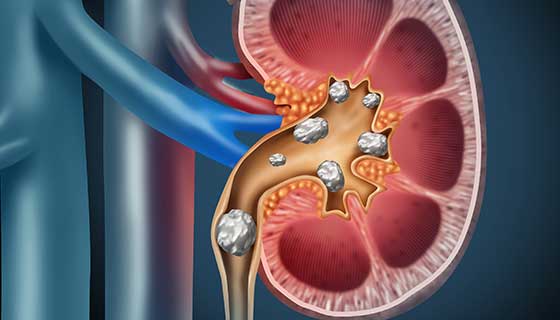

Kidney stones affect roughly 1 in 10 people at some point in their lives. While most cases resolve with hydration and time, some stones grow larger, recur frequently, or cause complications that require specialized intervention. These cases may fall outside the scope of general care; patients with complex presentations benefit from seeing a urologist trained in stone disease. Here is more information on how kidney stones specialists handle complicated cases:
What Are Kidney Stones Specialists?
A kidney stones specialists is a urologist who focuses on diagnosing and treating stone disease. Kidney stones specialists address both the physical stone and the underlying factors causing it to form. Because this approach goes beyond stone removal, it allows for treatment plans that are specifically designed to address long-term prevention, and patients benefit from care that targets the root causes of stone formation. Referral to a specialist is warranted when stones cause infection, obstruction, or kidney damage, as these complications require prompt and specialized intervention.
What Are Kidney Stones?
Kidney stones are hard deposits of minerals and salts that form inside the kidneys. They develop when urine becomes concentrated, which allows minerals to crystallize and stick together. Stones are classified by composition; common types include calcium oxalate, uric acid, struvite, and cystine stones. Each type forms under different biochemical conditions, and each may require a different treatment approach.
Stones range from the size of a grain of sand to several centimeters in diameter. Small stones often pass through the urinary tract without intervention, and they may cause only mild discomfort. Larger stones may lodge in the ureter or kidney. When this happens, urine flow is blocked, and the patient may experience severe pain, nausea, or blood in the urine.
Several factors influence stone formation. Diet, dehydration, and family history all contribute; certain medical conditions, such as obesity or hyperparathyroidism, also increase risk. Because the type and cause of a stone determine the most effective treatment, identifying both is a necessary early step.
What Makes Them Complicated?
Potential complications of kidney stones include:
- Stone size and location: Large stones or stones lodged in hard-to-reach areas of the kidney may resist natural passage and standard treatments.
- Recurrent stone formation: Patients who develop multiple stones over time may have an underlying metabolic disorder that requires further investigation.
- Anatomical factors: Anatomical abnormalities and certain conditions can complicate treatment.
How Are They Handled?
Treatment for complicated kidney stones depends on stone size, location, and composition, as well as the patient’s overall health. Specialists typically begin with imaging to map the stone’s exact position. For stones that are too large to pass naturally, extracorporeal shock wave lithotripsy (ESWL) uses focused sound waves to break stones into smaller fragments. These fragments then pass in the urine, and this method works for stones in accessible areas of the kidney. ESWL is non-invasive.
More complex cases necessitate surgical approaches. Ureteroscopy involves inserting a thin scope through the urethra and bladder to reach the stone directly, and a laser is then used to fragment it. Percutaneous nephrolithotomy (PCNL) requires a small incision in the back to access the kidney directly, which makes it an effective approach for larger stones that cannot be addressed through less invasive methods.
Seek Specialized Care Now
Complicated kidney stone cases call for a specialist equipped to interpret imaging accurately, perform advanced surgical procedures, and address the metabolic factors behind recurring stones. From diagnosis through long-term prevention, specialists combine surgical skill and clinical insight, and they can manage complicated cases. If you experience recurring stones, severe pain, or signs of infection, schedule a consultation with a specialist.
