
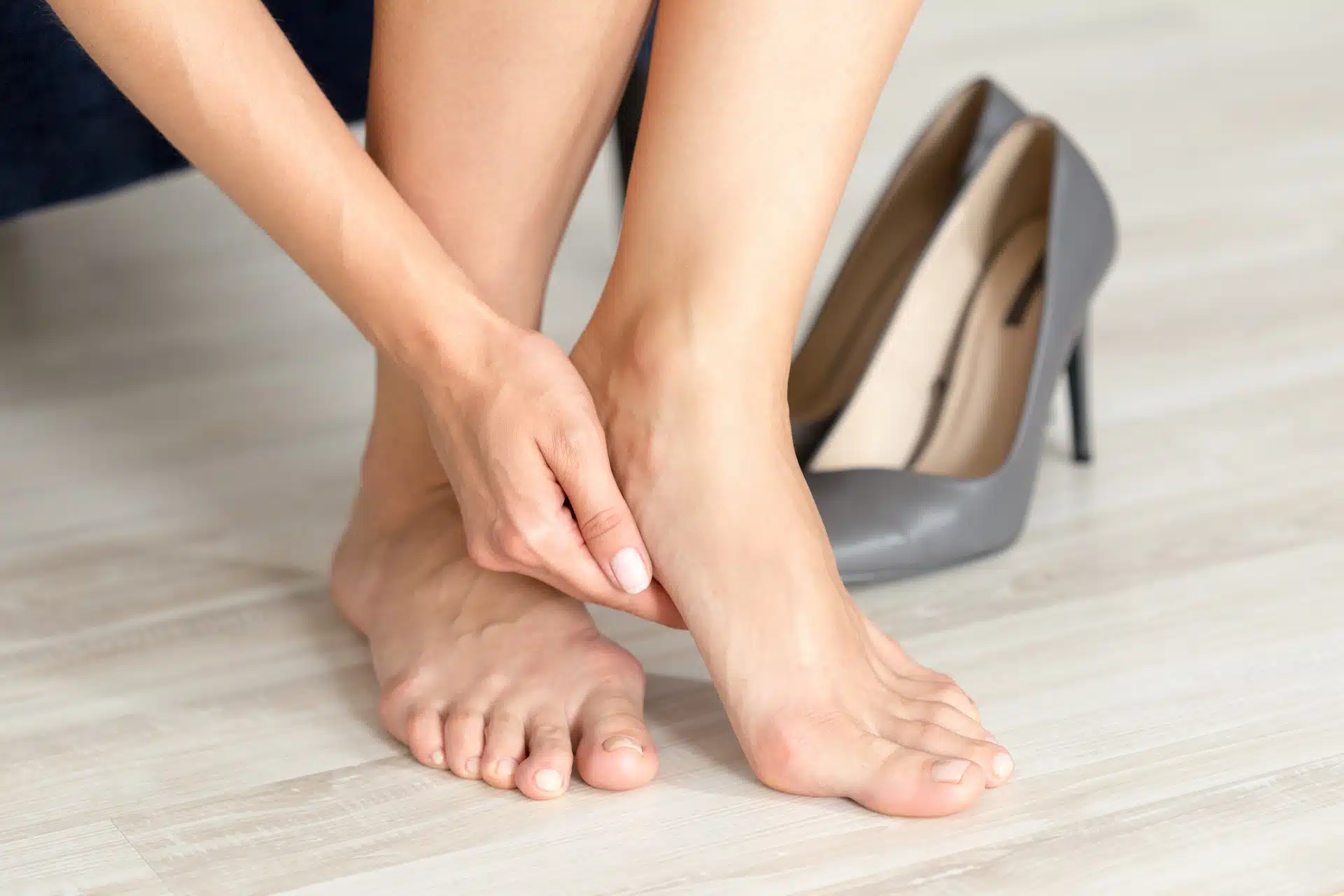

Plantar fasciitis causes pain along the bottom of the foot, usually near the heel. The plantar fascia is a thick band of tissue that connects your heel bone to your toes. Pain is often worst with the first steps in the morning, and it may return after long periods of sitting. Because symptoms can return, home care matters.
Simple Daily Stretching Exercises
Tight calf muscles pull on the heel, and they add strain to the plantar fascia. Stretching lengthens these muscles and may reduce arch tension. A wall stretch is a practical place to start with plantar fasciitis. Place your hands on a wall, and step one foot back with the knee straight. Keep the back heel on the floor, and lean forward until you feel a pull in the calf. Hold and repeat three times on each leg. Another useful stretch targets the plantar fascia directly. Sit in a chair and cross one foot over your knee. This stretch works well before your first steps in the morning, and it may reduce early-day heel pain. If a stretch causes sharp pain, ease off and try a lighter version. Loop a towel around the ball of your foot, and gently pull it toward you.
Supportive Arch Inserts Explained
Arch supports distribute pressure across the bottom of the foot, so here’s what to keep in mind when choosing and using them:
- Look for a semi-rigid insert with firm arch support and heel cushioning; soft gel inserts may feel comfortable but often lack the structure your arch needs.
- Over-the-counter inserts work well for many people with plantar fasciitis and are widely available.
- If store-bought options don’t relieve your symptoms after a few weeks, a foot specialist can create a custom orthotic molded to your foot.
- Custom orthotics address your specific foot mechanics and may reduce strain on the plantar fascia more effectively than standard inserts.
Effective Rest and Icing
Repeated impact can irritate the plantar fascia. Cut back on running or jumping, and try low-impact exercise such as swimming or cycling. If you stand for long periods at work, take short breaks and shift your weight between feet. A cushioned mat at your workstation may also reduce pressure on your heels. Rest does not mean complete inactivity. Walking short distances at a comfortable pace is generally fine, but avoid pushing through sharp pain. If a certain activity consistently triggers your heel pain, reduce or pause it until your symptoms improve.
Gradually returning to higher-impact activities lets the fascia adapt, lowering the chance of re-injury. Pay attention to how your feet feel throughout the day. Morning pain that fades with movement is common with plantar fasciitis. Pain that worsens as the day goes on may mean you are overdoing it. Elevate your feet slightly, and you should rest for 10 to 15 minutes.
Treat Plantar Fasciitis Today
Home remedies require consistent daily practice. Combine stretching, arch supports, rest, and ice, and note which steps ease your symptoms. Some cases improve with home care, but others need professional treatment. If heel pain lasts more than a few weeks, schedule a visit with a foot specialist. A specialist can examine your feet, and they will design a personalized stretching regimen or recommend arch supports. Book an appointment today to build a plan that fits your feet and daily routine.
